
Oregon Family Law and Divorce Law Blog
Showing all 225 posts in random order
Schedule A Consultation
We are happy to meet with you for a flat-fee, discounted consultation. Call today.
Call Now to Schedule A ConsultationSchedule Online Now


Understanding Oregon Writs of Assistance in Family Law
A Writ of Assistance is a powerful court order used in Oregon family law to enforce judgments, often involving the retrieval of personal property or ensuring compliance with custody orders. This article explores its applications and the legal framework supporting it.
Read More
Comprehensive Guide to Calculating Spousal Support in Oregon
Explore how spousal support is determined in Oregon, including the key factors courts consider and the tax implications for both parties.
Read More
Navigating Divorce: Planning Your Child’s Education in Oregon
Explore how divorce proceedings in Oregon address child custody, support, and educational planning. Learn about legal and physical custody implications for your child's education.
Read More
Understanding Writs of Assistance in Oregon Child Custody Cases
A writ of assistance is a legal tool used to enforce child custody orders in Oregon. This article explores its purpose, process, and limitations.
Read More
Understanding Oregon's Parenting Class Requirement in Divorce Proceedings
Oregon mandates a parenting class for divorcing parents to support children's adjustment, integral to finalizing the divorce.
Read More
Crafting Comprehensive Parenting Plans to Prevent Future Disputes in Oregon
A detailed parenting plan is crucial in preventing future disputes between separated or divorced parents. This article explores the importance of specificity in these plans and offers guidance on how to create effective agreements.
Read More
Essential Steps to Prepare for Divorce in Oregon
Preparing for divorce in Oregon involves understanding property division, custody arrangements, and state-specific legal requirements. This guide outlines key steps to ensure a smoother process.
Read More
Navigating Successful Co-Parenting After Divorce in Oregon
Explore strategies for effective co-parenting after divorce in Oregon, emphasizing mediation and collaborative processes to prioritize children's well-being.
Read MoreMistakes to Avoid During an Oregon Divorce
Divorce spawns big emotion, and even well-meaning parents make mistakes without thinking about the ramifications of their actions. To ensure a smooth process, we have compiled a list of common pitfalls to avoid doing during a divorce.
Read More
Understanding Property Division in Oregon Divorces: Equitable Distribution Explained
Oregon follows the equitable distribution model for property division in divorce, not community property. Learn how assets are divided fairly based on state laws.
Read MoreRecent Posts

Uncontested Summary Dissolution in Oregon: Do You Qualify for the Simplest Divorce?
circuit court clerk
eligibility criteria
filing fee
filing for summary dissolution
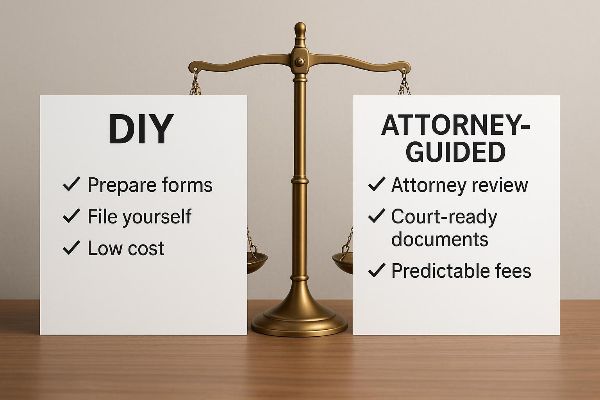
DIY vs. Attorney‑Guided Uncontested Divorce in Oregon: Cost, Risks & When to Get Help
attorney-guided
attorney-guided review
business interests
child

Uncontested Divorce in Oregon: The Complete 2025-2026 Guide
attorney fees
child custody
child support worksheets
co-petitioners

Introducing Unlink: The Oregon‑Smart Way to Divorce Amicably
attorney fees
contested divorce
court hearings
custody
Understanding Oregon's Three Types of Spousal Support
alimony
child custody
compensatory spousal support
dissolution process