What Is an Uncontested Divorce in Oregon?
An uncontested divorce in Oregon is one in which both spouses agree on all major issues, from property division to child custody, so there's no need for a trial or courtroom battle. Oregon refers to divorce as a dissolution of marriage, and because Oregon is a no-fault divorce state, the only required ground is "irreconcilable differences." That means neither spouse has to prove the other did anything wrong to cause the divorce. In an uncontested case, the couple reaches a settlement agreement and submits it to the court for approval, avoiding the stress and expense of litigation.
Benefits of Choosing an Uncontested Divorce
Opting for an uncontested divorce can provide several key benefits:
- Lower cost: Without drawn-out court hearings or extensive legal battles, uncontested divorces tend to be much more affordable than contested ones. Couples can often save thousands in attorney fees and court costs.
- Faster resolution: When both parties agree, the divorce process moves quickly. Many uncontested divorces in Oregon are finalized within a few weeks to a couple of months, far shorter than the many months or even years a contested divorce might take.
- Less stress and conflict: Working cooperatively on the terms of the divorce generally reduces emotional strain. By reaching an agreement amicably, spouses avoid the hostility and stress of a courtroom fight – a benefit that can be especially important if children are involved.
- More control & privacy: In an uncontested divorce, the spouses, not a judge, decide the outcomes. This control allows you to customize agreements to suit your family’s needs. It also keeps personal matters more private since there’s no public trial exposing your disputes.
Oregon's Requirements for Divorce
Before filing for any divorce in Oregon, including an uncontested one, you must meet the state's residency requirements. If your marriage took place in Oregon, at least one spouse needs to be living in Oregon when you file the divorce petition. If you were married outside of Oregon, then one spouse must have lived in Oregon continuously for at least six months before filing. These rules ensure Oregon courts have jurisdiction over your divorce. Another critical point is that Oregon only allows irreconcilable differences as the reason for divorce – in other words, you and your spouse can no longer get along. This no-fault approach simplifies the process since you don't have to assign blame or prove any misconduct to get divorced. As long as both spouses agree on the divorce terms, you can proceed with an uncontested dissolution of marriage once residency is established and papers are prepared.
The Uncontested Divorce Process in Oregon
Even when spouses agree on everything, there are still specific steps to follow to obtain a legal divorce. Here's a step-by-step look at how an uncontested divorce typically works in Oregon:
- File the Petition: The process starts by filing a Petition for Dissolution of Marriage with the appropriate county court. If both spouses agree from the outset, you have the option to file jointly as co-petitioners, which means you submit one petition together. Otherwise, one spouse (the petitioner) files the paperwork and officially starts the case. Along with the petition, you'll prepare other required forms (such as a Summons, Confidential Information Form, and, if you have children, a proposed Parenting Plan and child support worksheets).
- Serve the Papers: If you did not file jointly, the filed divorce papers must be formally served on the other spouse (the respondent). Oregon law typically gives the respondent 30 days to file a response after being served. In an uncontested divorce, the responding spouse usually either agrees and signs the necessary documents or simply does not contest the filing. If you filed as co-petitioners, this service step is skipped because both of you have already signed and acknowledged the case.
- Settlement Agreement: Next, the spouses prepare a written settlement agreement (often incorporated into a Stipulated General Judgment of Dissolution). This document outlines exactly how you will handle all the key issues – dividing property and debts, custody and parenting time if you have kids, child support, and whether any spousal support (alimony) is involved. Since the divorce is uncontested, both parties must agree to these terms. It's crucial to be thorough and clear in this agreement to avoid any future misunderstandings or conflicts.
- Parenting Class (if children): If you have minor children, Oregon courts require both parents to complete a brief parenting education class as part of the divorce process. This course is designed to help parents understand the impacts of divorce on children and learn co-parenting strategies. You will need to file a certificate of completion with the court, so it's wise to take this class early to avoid delaying the final judgment.
- Submit Final Documents: Once the settlement agreement (judgment) is ready – and after any required classes are done – all your paperwork is submitted to the court for review. In straightforward, uncontested cases, often no court hearing is required; the judge can review the documents privately. In some situations (especially if you didn't file jointly or if the judge has any questions), a brief hearing might be scheduled to confirm everything is in order. Both spouses may need to attend, but since you agree on all terms, it’s typically quick and routine.
- Final Judgment and Dissolution (Divorce): Finally, a judge reviews your agreement and filings. If everything meets legal requirements and the judge finds the terms fair and in order, they will sign the General Judgment of Dissolution of Marriage, officially ending the marriage. Once signed by the judge and entered by the court, your divorce is final. Oregon does not have a mandatory waiting period to finalize a divorce, so an uncontested divorce can be completed as soon as the paperwork is processed and a judge is available to sign.
How Long Does an Uncontested Divorce Take?
One of the biggest advantages of an uncontested divorce is the speed. Because Oregon has no mandatory waiting period, a divorce can be finalized relatively quickly once all paperwork is filed. In ideal cases – for example, a simple co-petition divorce with no kids – the entire process might be wrapped up in a matter of weeks. In most typical uncontested cases, you can expect it to take around one to three months from start to finish. This accounts for the time to prepare documents, the 30-day response window (if applicable), and the court's processing time to review and sign the judgment. Delays can happen if paperwork isn’t filled out correctly or if court dockets are busy, but even then, uncontested divorces are usually much faster than contested ones. By contrast, a contested divorce – where spouses are fighting over issues – can drag on for many months or even years. The efficiency of uncontested divorce allows both parties to move forward sooner, which can be emotionally and financially beneficial.
How Much Does an Uncontested Divorce Cost?
Generally speaking, uncontested divorces are far more affordable than their contested counterparts. The required court filing fee for a divorce in Oregon is about $301 (as of 2025) to open the case. If you file jointly as co-petitioners, you pay one filing fee; if one spouse files and the other later wants to file a formal response, the respondent may need to pay a similar fee as well. Beyond court fees, your costs will depend on whether you get professional help or handle the paperwork yourselves:
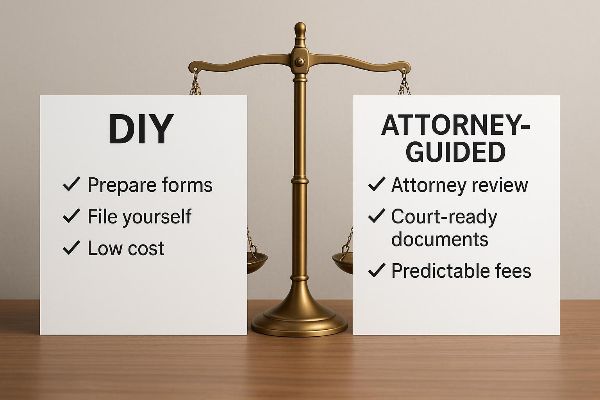
- DIY approach: Many Oregon couples complete an uncontested divorce without hiring attorneys, using the free forms provided by the state. In this case, your main expenses might be the filing fee (and maybe a small fee for the parenting class if applicable). This is the cheapest route, though it requires careful attention to detail.
- Online or flat-fee services: Some people opt for divorce preparation services or online platforms to generate the paperwork. For example, Unlink Legal is an Oregon-specific uncontested divorce platform created by family law attorneys that prepares court-ready documents and guides you through the process for a flat fee. These services typically cost a couple of thousand dollars or less, which is still far lower than the cost of a traditional contested divorce.
- Attorney assistance: Even in an uncontested situation, you might hire a lawyer to handle the process or review your agreement. Some attorneys offer flat fees for uncontested cases. This could range from under $1,500 to a few thousand dollars, depending on complexity. It's more expensive than DIY but provides peace of mind that everything is done correctly.
No matter which route you choose, an uncontested divorce almost always costs significantly less than a contentious divorce (which can easily run into tens of thousands of dollars in legal fees). If you're on a tight budget, consider starting with a DIY or online solution, then using a lawyer for limited-scope tasks like reviewing the final agreement.
Handling Child-Related Issues in an Uncontested Divorce
Having children adds some extra steps to any divorce. However, couples can still proceed uncontested as long as they agree on a parenting plan and support. In Oregon, you and your spouse need to decide how you'll share custody (joint or sole) and outline a parenting schedule that works for everyone. You must also calculate child support using Oregon’s guidelines, typically done with a worksheet that factors in both parents' incomes, the number of overnights each parent has with the kids, and other expenses. If you both agree to these terms, the details will be included in your settlement agreement and, ultimately, in the final judgment. This calculator is provided by the state of Oregon. Keep in mind that Oregon requires divorcing parents of minors to complete the parenting education class mentioned earlier. Additionally, the court will ensure that any agreement involving children is in the best interests of the child. Even if you and your spouse are on the same page, a judge will review custody and support arrangements carefully before approving the uncontested divorce. As long as your plan is reasonable and meets state guidelines (for example, child support is roughly what the state formula recommends, or you have a good reason if it's different), the court is likely to approve it without issue.
Do You Need a Lawyer for an Uncontested Divorce in Oregon?
Legally, you do not have to hire a lawyer for an uncontested divorce – many couples handle it on their own. That said, consulting with an experienced Oregon family law attorney can be very helpful, even in an amicable split. A lawyer can ensure all your paperwork is completed correctly, help you consider any details you might have overlooked, and make sure your rights are protected in the agreement. This can prevent costly mistakes or omissions that might cause issues down the road.
If you’re worried about costs, there are budget-friendly options. For example, the Unlink Legal platform mentioned above offers attorney-reviewed divorce document preparation at a flat rate, helping save time and reduce errors.
For those who prefer direct legal counsel, you might choose to work with a firm on an uncontested basis – some law firms offer services specifically for uncontested cases. For instance, Pacific Family Law Firm’s uncontested divorce services can guide you through the process for a predefined fee.
Ultimately, whether you use an attorney or not, the key is to ensure that your agreement is thorough and compliant with Oregon law, and that both parties fully understand their rights and obligations. With good preparation and maybe some professional guidance, an uncontested divorce in Oregon can be a relatively smooth and empowering process for both spouses to move forward.