
Oregon Family Law and Divorce Law Blog
Showing all 225 posts in random order
Schedule A Consultation
We are happy to meet with you for a flat-fee, discounted consultation. Call today.
Call Now to Schedule A ConsultationSchedule Online Now


Top 5 Reasons to Seek Child Support Modification in Oregon
Explore the primary reasons for modifying child support in Oregon, including changes in income, parenting time, and family dynamics.
Read More
Substance Abuse and Its Impact on Oregon Child Custody Cases
Substance abuse can significantly affect child custody decisions in Oregon. Understanding the legal implications is crucial for parents navigating these complex cases.
Read More
Navigating Divorce When Your Spouse Declines Legal Representation in Oregon
Exploring the implications when one spouse chooses not to hire a divorce attorney in Oregon, including potential delays and decision-making challenges.
Read More
Understanding Temporary Protective Orders and Status Quo Orders in Oregon Child Custody Cases
Explore the distinctions between Temporary Protective Orders of Restraint (TPOR) and Status Quo Orders (SQO) in Oregon, crucial tools for maintaining stability during custody proceedings.
Read More
Understanding Oregon Child Custody Decisions: Key Factors Judges Consider
This article explores the key factors Oregon judges consider when determining child custody, focusing on the best interests of the child.
Read More
Understanding Why Joint Custody Breaks Down in Oregon
Joint custody arrangements can be challenging for divorced parents. We explore common reasons these agreements falter and how to address them.
Read More
Understanding Child Support Obligations for Adult Children in Oregon
In Oregon, child support obligations can extend beyond a child's 18th birthday if they are attending school. This article explores the legal framework and requirements for supporting adult children under Oregon law.
Read More
Understanding Divorce Grounds in Oregon: No-Fault and Its Implications
This article explores the legal grounds for divorce in Oregon, focusing on its no-fault system and what it means for spouses seeking to dissolve their marriage.
Read More
Understanding Divorce and Legal Separation in Oregon
Explore the differences between divorce and legal separation in Oregon, including legal implications and considerations for couples.
Read More
Understanding Cash Medical Child Support in Oregon: A Comprehensive Guide
This comprehensive guide demystifies cash medical child support in Oregon, highlighting its role in covering a child's healthcare expenses when private insurance falls short. It explores the legal criteria for determining when cash medical support is necessary, including affordability and availability of private health insurance, underpinned by ORS 25.321 and OAR 137-050-0750. Through a hypothetical scenario, it illustrates how obligations are calculated to ensure children's healthcare needs are met equitably.
Read MoreRecent Posts

Uncontested Summary Dissolution in Oregon: Do You Qualify for the Simplest Divorce?
circuit court clerk
eligibility criteria
filing fee
filing for summary dissolution
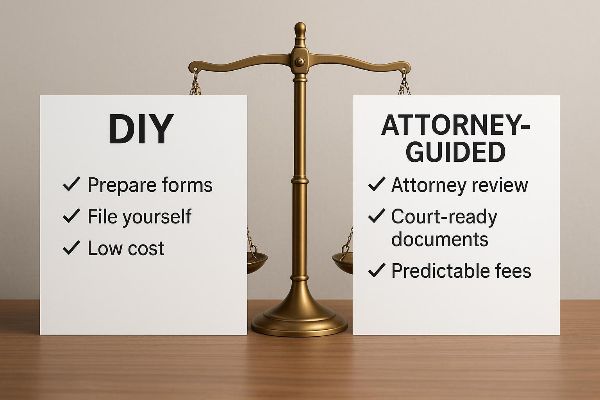
DIY vs. Attorney‑Guided Uncontested Divorce in Oregon: Cost, Risks & When to Get Help
attorney-guided
attorney-guided review
business interests
child

Uncontested Divorce in Oregon: The Complete 2025-2026 Guide
attorney fees
child custody
child support worksheets
co-petitioners

Introducing Unlink: The Oregon‑Smart Way to Divorce Amicably
attorney fees
contested divorce
court hearings
custody
Understanding Oregon's Three Types of Spousal Support
alimony
child custody
compensatory spousal support
dissolution process