
Oregon Family Law and Divorce Law Blog
Showing all 225 posts in random order
Schedule A Consultation
We are happy to meet with you for a flat-fee, discounted consultation. Call today.
Call Now to Schedule A ConsultationSchedule Online Now


Navigating Parenting Plan Modifications in Oregon: A Comprehensive Guide
This article explores the process of modifying a parenting plan in Oregon, detailing steps for mutual agreement and court intervention when necessary.
Read More
Essential Questions to Ask Your Oregon Family Law Attorney
The initial consultation with a family law attorney is crucial for setting the tone and direction of your case. Here are six key questions to ensure you choose the right legal representative.
Read More
Understanding No-Fault Divorce Grounds in Oregon
Explore the concept of no-fault divorce in Oregon, where irreconcilable differences suffice to dissolve a marriage. Learn about the legal framework and implications.
Read More
How to Modify Child Custody, Visitation, or Support in Oregon After Final Judgment
Understanding the process to modify child custody, visitation, or support orders in Oregon after a final judgment is crucial for parents facing changed circumstances.
Read More
Understanding the Collaborative Divorce Process in Oregon
The collaborative divorce process offers a non-adversarial approach to resolving marital disputes in Oregon, focusing on mutual respect and open communication.
Read More
Navigating the Divorce Process in Oregon: What You Need to Know
The process of getting a divorce in Oregon can be legally complicated and emotionally challenging. To ensure a smooth process, it is important to understand the state’s residency requirements, options for an uncontested or contested divorce, and specifics about dividing marital assets.
Read More
Navigating Child Custody Modifications in Oregon: A Comprehensive Guide
Exploring the intricacies of child custody modifications in Oregon, this guide outlines when and how changes to existing custody arrangements can be pursued under state law.
Read MoreCan I get my attorney fees paid in my Oregon divorce case?
It is common in any Oregon divorce or other family law matter, from child custody to spousal support cases, for clients to ask about attorney fees. Generally, they want to know whether the other side will be made to pay their attorney fees.
Read More
Navigating Divorce as a Business Owner in Oregon
Divorce can significantly impact business owners, affecting both personal and professional assets. Understanding how to navigate these complexities in Oregon is crucial for protecting your business interests.
Read More
Understanding Father's Rights in Oregon Child Custody Cases
Explore how Oregon law treats father's rights in child custody cases, emphasizing the equal standing of fathers and mothers in custody decisions.
Read MoreRecent Posts

Uncontested Summary Dissolution in Oregon: Do You Qualify for the Simplest Divorce?
circuit court clerk
eligibility criteria
filing fee
filing for summary dissolution
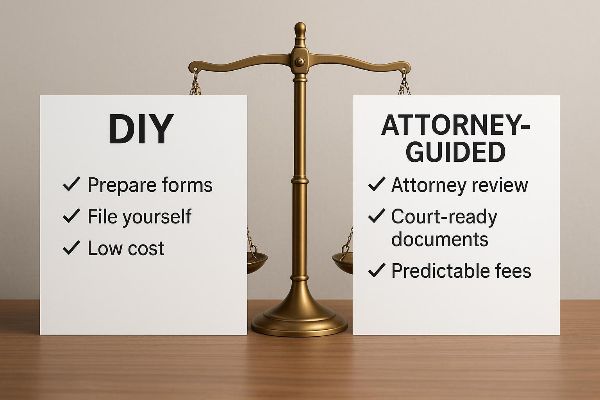
DIY vs. Attorney‑Guided Uncontested Divorce in Oregon: Cost, Risks & When to Get Help
attorney-guided
attorney-guided review
business interests
child

Uncontested Divorce in Oregon: The Complete 2025-2026 Guide
attorney fees
child custody
child support worksheets
co-petitioners

Introducing Unlink: The Oregon‑Smart Way to Divorce Amicably
attorney fees
contested divorce
court hearings
custody
Understanding Oregon's Three Types of Spousal Support
alimony
child custody
compensatory spousal support
dissolution process