
Oregon Family Law and Divorce Law Blog
Showing all 225 posts in random order
Schedule A Consultation
We are happy to meet with you for a flat-fee, discounted consultation. Call today.
Call Now to Schedule A ConsultationSchedule Online Now


Understanding Writs of Assistance in Oregon Child Custody Cases
A writ of assistance is a legal tool used to enforce child custody orders in Oregon. This article explores its purpose, process, and limitations.
Read More
Effective Communication Strategies for Co-Parenting in Oregon
Explore practical tips for improving communication with your co-parent, focusing on strategies to enhance cooperation and benefit your children.
Read More
Navigating Social Media Risks During Divorce in Oregon
Social media poses significant risks during divorce proceedings in Oregon, as online posts can become evidence impacting custody and support decisions. Understanding these risks is crucial for safeguarding your case.
Read MoreOregon Child Custody: Sole vs. Joint - What's the Difference?
Child custody is one of the most contentiously and contested issues in Oregon family law cases. Misconceptions about what "custody" actually means tend to meld with advice from well-meaning friends and family and with conflicting information from web sources that might not even reflect Oregon law. What's the difference between "sole custody" and "joint custody" in Oregon?
Read MoreEssential Self-Care Strategies During Divorce in Oregon
Divorce is a challenging process that requires careful decision-making. Prioritizing self-care can support better outcomes for you and your family.
Read More
Understanding the Tax Implications of Divorce in Oregon
Explore how divorce impacts tax responsibilities in Oregon, including considerations for alimony, child support, and custody arrangements.
Read More
Understanding Why Joint Custody Breaks Down in Oregon
Joint custody arrangements can be challenging for divorced parents. We explore common reasons these agreements falter and how to address them.
Read MoreCan I get my attorney fees paid in my Oregon divorce case?
It is common in any Oregon divorce or other family law matter, from child custody to spousal support cases, for clients to ask about attorney fees. Generally, they want to know whether the other side will be made to pay their attorney fees.
Read More
Navigating Debt Division in Oregon Divorce Proceedings
Explore how marital debts are divided during divorce in Oregon, including common pitfalls and the equitable distribution approach. Learn how courts assign debts and what to expect if your ex-spouse defaults on payments.
Read More
Understanding Oregon's New Law: Paralegals in Divorce Representation
Oregon's new legislation permits licensed paralegals to represent clients in certain family law matters, including divorce. This development aims to enhance access to legal representation for those who may struggle with traditional attorney fees.
Read MoreRecent Posts

Uncontested Summary Dissolution in Oregon: Do You Qualify for the Simplest Divorce?
circuit court clerk
eligibility criteria
filing fee
filing for summary dissolution
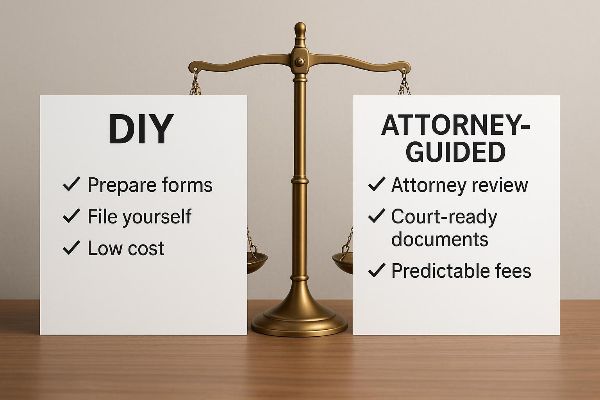
DIY vs. Attorney‑Guided Uncontested Divorce in Oregon: Cost, Risks & When to Get Help
attorney-guided
attorney-guided review
business interests
child

Uncontested Divorce in Oregon: The Complete 2025-2026 Guide
attorney fees
child custody
child support worksheets
co-petitioners

Introducing Unlink: The Oregon‑Smart Way to Divorce Amicably
attorney fees
contested divorce
court hearings
custody
Understanding Oregon's Three Types of Spousal Support
alimony
child custody
compensatory spousal support
dissolution process