How does establishing paternity affect child support obligations?
Establishing paternity solidifies a legal relationship between the non-custodial parent (father) and their child which results in them being financially responsible for providing support. Child support obligations are decided based on Oregon guidelines, taking into account both parents' income, the child's needs, and any custody arrangements.
Can I include child custody arrangements in my Oregon prenuptial agreement?
No, child custody arrangements cannot be included in an Oregon prenuptial agreement because they are determined by the best interests of the child at the time of divorce or separation. Prenups typically address financial matters only.
What is paternity and why is it important in Oregon?
Paternity refers to the legal recognition of a man as the father of a child. Establishing paternity in Oregon ensures that the child has access to benefits such as child support, inheritance rights, and medical care. It also helps protect the father's parental rights and responsibilities.
How is child custody determined in Oregon?
Child custody decisions are based on the statutory requirements listed at ORS 107.137. These requirements include the best interests of the child, considering factors like emotional bonds with parents and siblings, abuse by one parent, stability of home environment, and each parent's ability to meet the child's needs.
How is child support calculated in Oregon?
Child support in Oregon is calculated using the Child Support Guidelines, which consider both parents' gross income, potential income, and expenses for childcare and health insurance. The guidelines also factor in the number of children involved, custody arrangements, and any extraordinary medical or educational expenses. The final amount will be determined by a judge if both parties cannot agree on an amount.
Can I waive my right to spousal support in an Oregon prenuptial agreement?
Yes, you can waive your right to spousal support; however, the court may still award it if they find that enforcing the waiver would result in substantial injustice or be unconscionable due to unforeseen circumstances at the time of divorce.
How is child support calculated?
Child support in Oregon is calculated using a formula that considers both parents' incomes, parenting time, and additional expenses such as childcare and health insurance costs. The Oregon Child Support Guidelines provide a framework for determining the amount of support each parent should contribute.
What is the legal process for relocating with a child in Oregon?
In Oregon, the parent who has primary custody must provide written notice to the other parent at least 60 days before relocating. If the non-custodial parent objects, they must file a motion within 30 days of receiving the notice. The court will then consider factors like best interests of the child and both parents' reasons for moving or objecting before making a decision.
How does child custody work within an Oregon Divorce Settlement Agreement?
Child custody arrangements are included in your Oregon Divorce Settlement Agreement. Custody can be joint or sole depending on what's best for the child(ren). A parenting plan outlining visitation schedules should also be included.
How does one establish paternity in Oregon?
In Oregon, paternity can be established voluntarily by both parents signing a Voluntary Acknowledgment of Paternity (VAP) form at or shortly after the child's birth. Otherwise, it can be established through a court order via genetic testing or other evidence.
What are the legal rights of grandparents in Oregon?
In Oregon, grandparents don't have specific rights, but do have the same rights as any other person who has established a parent-like relationship with a child. Under this framework, grandparents have the right to seek visitation with their grandchildren through a court order. However, they must prove that they have an established relationship with the child and that it is in the child's best interest to maintain contact. Parents' wishes and rights are given priority over those of grandparents.
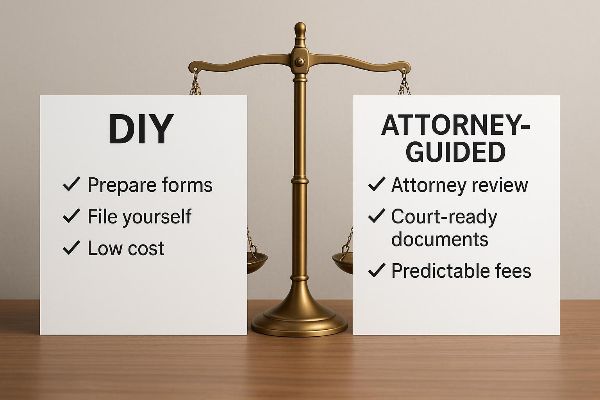
Do I need an attorney for my Oregon divorce?
While it is not required to have an attorney during your divorce process in Oregon, having legal representation can be beneficial as they will ensure your best interests are protected and guide you through complex legal processes involved in matters like property division, child custody arrangements, and spousal support.